
Jersey’s latest population and migration estimates for the period 2017 to 2025 can now be viewed in our interactive population data explorer in the Find data and past reports section at the bottom of this page.
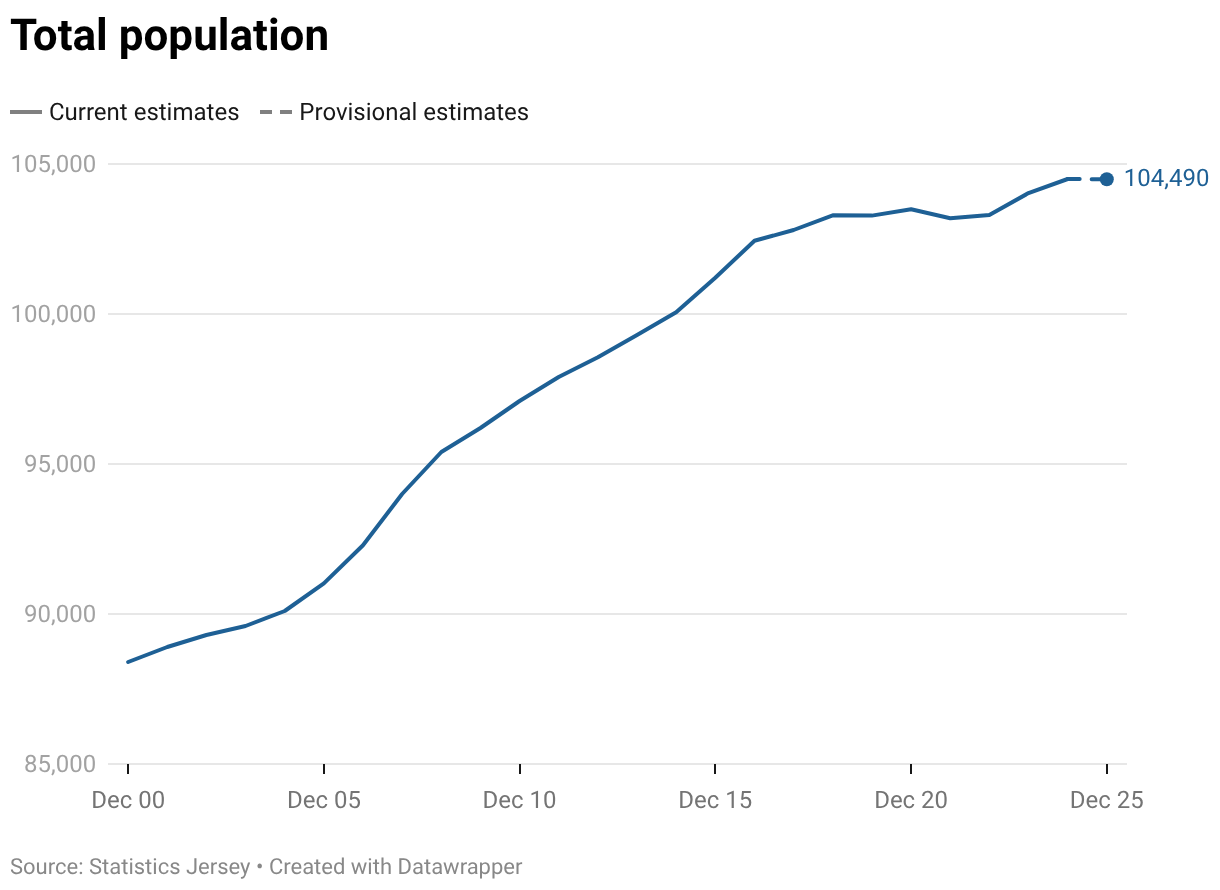
Jersey’s population at the end of 2025 was estimated to be 104,490 people.
The population remained essentially the same as the revised estimate of 104,500 people at the end of 2024.
During the last 10 years, the population has increased by approximately 3,280 people.
Net migration and natural change
The total population change is made of up net migration and natural change.
Net migration was +180 in 2025. This is the number of people that moved to the Island minus the number of people that moved away from the Island.
The 2025 figure was comprised of approximate net migration for people of each residential and employment status:
- +480 with Registered status
- +300 with Licensed status
- +70 with Entitled for work status
- -770 with Entitled status
Natural change was -200 in 2025, as there were 200 more deaths than births.

Births and deaths
There were more deaths than births each year from 2022 to 2025.

Immigration and emigration
Net migration was lower in 2025 compared to 2024, due to lower immigration.

Population by age and sex
The age structure of Jersey’s population has become older in recent years, with the largest five-year age group being 55- to 59-year-olds.
Population pyramid
The age profile of Jersey’s population is shown in the below population pyramid. This shows that the number of people aged 65 and over grew by 13% between 2020 and 2025.


Dependency ratio
The dependency ratio is the ratio of the non-working age population to the working age (16- to 64-years-old) population. The old age dependency ratio is the aged 65 and over population divided by the working age population. The overall dependency ratio rose between 2015 and 2025 from 48.7 to 53.5 dependently aged people for every 100 people of working age.

Population by nationality (experimental)
Experimental nationality statistics are produced using linked administrative data. These statistics are available for adults aged 16 years and older.
Experimental statistics are in the testing phase and the figures potentially have a wider degree of uncertainty. This gives an opportunity to involve potential users and stakeholders in assessing their quality and suitability, while still providing useful information for users.
Read more about experimental statistics.


Population by residential and employment status (experimental)
Experimental residential and employment status statistics are also produced using linked administrative data. To produce these statistics, estimates of people’s probable eligibility for the statuses are based on their estimated length of residency. These statistics are available for adults aged 16 years and older.
Read more about experimental statistics.


Population excluding temporary work permits
Temporary work permits allow people to live and work in Jersey for short periods, usually up to nine months. People on temporary work permits cannot bring dependants and must take mandatory periods away from Jersey before they can return, and their time spent in Jersey does not count towards qualifying for indefinite leave to remain or Entitled for work status.
The total population increased by 1,000 between 2020 and 2025. However, when excluding those on temporary work permits, it decreased by 810.

Data sources and methods
Between each census, population and migration estimates are produced annually using linked administrative data. The latest of these estimates are for the year 2025.
Administrative data is data collected by the government for the purposes of running services such as education, health, and social security benefits.
For detailed information on how population estimates are calculated from linked administrative data see the latest Methodology and quality report.
Find data and past reports
The population and migration data can be viewed in our interactive population data explorer.
You can find the total population data on the open data website.
Find past reports on our release calendar.